
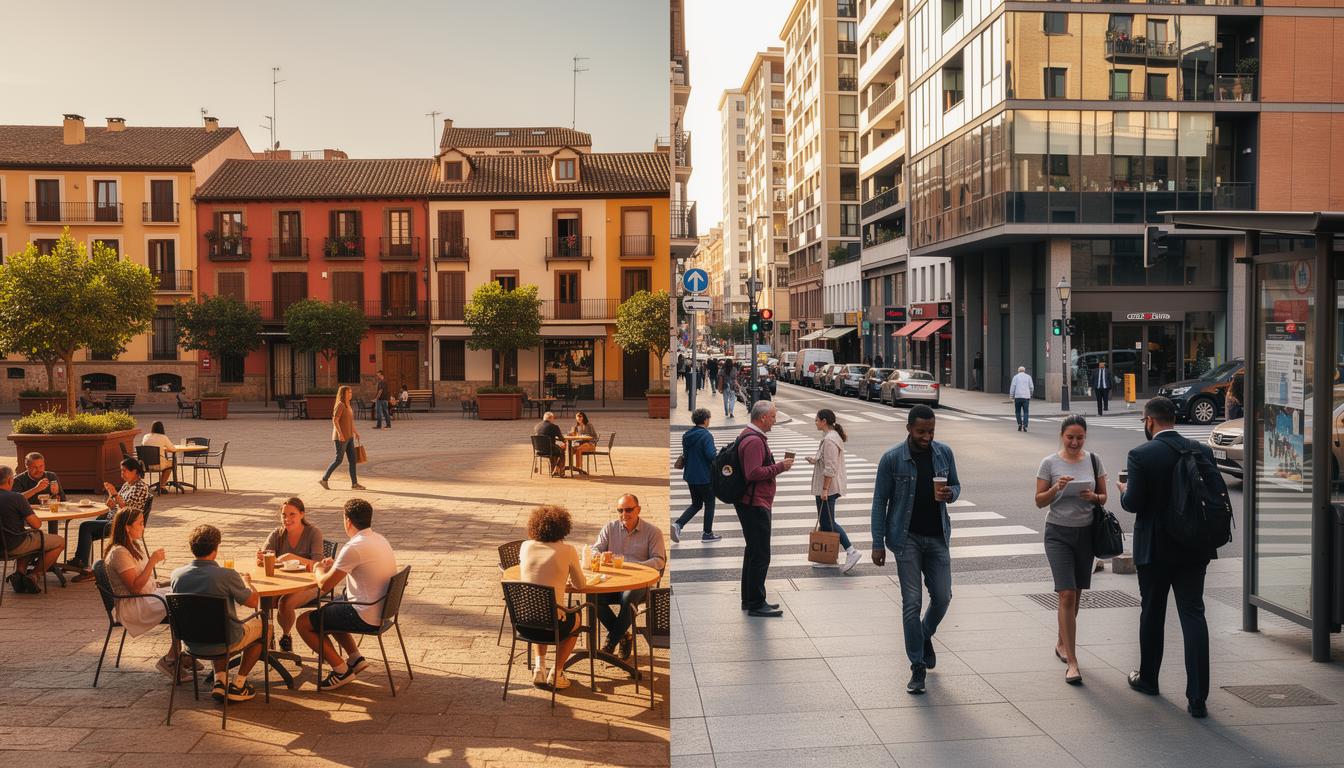
Madrid, Miami, two families, worlds apart. Monthly bills tap on the account, sometimes heavy, sometimes barely a ripple in Spain next to the US tsunami. No need to calculate for hours, the contrast stares straight at the wallet. Affordability dances with the euro, sometimes drowns in the dollar rain. The question spins, who manages better, who suffers more, who celebrates payday with a smile?
The raw facts about cost of living between Spain and the USA
Salaries intrigue, costs sting, and policies color every cent. The calculation, it never rests: who actually lives easier, who sacrifices more, who adapts better? Midday lunch, morning metro, monthly rent—every gesture anchors the reality. Payments switch from euro to dollar in the blink of an eye. Students roam internships in Madrid, retirees scan Florida horizons, parents survey schools, and nothing prepares you for the size of the gap.
A lire en complément : Strategies for UK Property Investors to Navigate and Counteract Market Volatility Risks
What creates this distance, what closes it, what does the balance sheet say about cost of living when Spain faces the USA for 2026?
Those seeking deeper insights can understand the cost of living differences between spain and the usa through detailed breakdowns.
A voir aussi : Top UK Hotspots for Commercial Real Estate Investment in 2023: Where to Put Your Money Now
The main differences in day-to-day expenses
Madrid sings with its markets and affordable tomatoes, New York laughs—$4, really? Numbeo draws up the numbers, 2026 data lays out the lines without ceremony. Madriders slip into cafes for spontaneous tapas, New Yorkers navigate higher rent, higher food, double or nothing for every staple. Rent devours budgets in the US, health insurance lurks on every pay sheet, groceries in Spain smile with low prices, every provincial euro stretches further than in any US suburb.
Affordability does not follow borders but lifestyles, policies, and sometimes weather. The cost of living from Spain to the USA meets in the same ledger, but never looks the same on the page.
| Expense Category | Madrid (Spain) | New York (USA) |
|---|---|---|
| One-bedroom apartment city center per month | €1,170 | $3,550 |
| Monthly groceries (basic staples) | €290 | $480 |
| Utilities (electricity, heating, water) | €110 | $200 |
| Public transport monthly pass | €55 | $132 |
Salaries in the US inflate expectations. Reality: high paychecks melt on insurance, rent, school, all in the blink of one or two bills. Spanish incomes shock with smallness, but costs rarely spin out of control—universal healthcare, university costs on a human scale, family budget squeezing less harshly. A Houston wallet smiles where a New York one sulks, while Barcelona renters frown down at Palma’s rising costs. Purchasing power in the USA only shines at first look, insurance and rent nibble at bonuses, never enough left at the end of the month. The rules don’t travel, the context spins the story differently in every city.
The residents’ and expats’ stories in the Spain vs USA cost dilemma
Digital nomads, retirees basking in Andalusian light, students tumbling into Erasmus nights—they all compare, they all count, nobody shrugs at the difference. Some US professionals pack up, bills shrink, meals taste richer. Others cross the ocean, chasing bigger American salaries. Demographics complicate comparison. Young US professionals choke on New York rent, while families in Spain breathe easier with childcare and accessible schools. Retirees run the numbers, Spain wins on pensions and health, never haunted by US hospital invoices. Everyone brings a different bill, everyone tells a unique story.
Who searches for adventure, who clings to security, which side bends with fears or dreams, the cost of living between Spain and the US never answers the same way for everyone.
The balance sheet for housing in Spain and the USA
Housing chews patience, or nurtures a little oasis, depending on the postcode. The capital stripes the map: Madrid and Barcelona rub shoulders, Valencia and Malaga relax the pace, New York and Los Angeles spike the adrenaline, wallets sweat. Idealista and Zillow, 2026, talk in raw figures. Median rent for a city-center one-bedroom in Madrid: €1,170, Barcelona holds steady, Valencia under €800, even Malaga does not threaten. Across the ocean, New York flirts with $3,550 for the same size. Los Angeles commands $2,650, Tulsa in Oklahoma? Suddenly rent drops to $950, mirroring Spanish calm. Buying throws fresh drama: Madrid apartments average €4,200 per m², New York, much higher at $15,500 per m². Suburbs wait, prices sink, but US homeowners see property taxes chewing 2% per year. Utilities? Spanish electricity nibbles at €70 a month, while big US homes double that bill and then some.
The influences shaping housing affordability
Location decides everything. Barcelona’s Gràcia or Brooklyn’s Dumbo drains savings quickly. Urban living, the price of proximity. Spain’s smaller cities soothe the wallet, rural Castilla or small-town Iowa? Rents plummet, jobs less numerous. Legislation weighs on the scales: Spain occasionally controls rents, while the USA releases the market to wild speculation. Housing type counts, a detached house pushes US costs skyward, while compact Spanish flats keep the budget grounded. Taxes sneak in, yearly in the US, upfront in Spain, notarization and paperwork often the same price as a holiday.
The comparison of essentials: groceries, utilities, daily transport
Fridge-empty, bags in hand, the supermarket choice sets the mood. Spaniards frequent Mercadona or Carrefour, a liter of milk rests at €0.95, half the US rate at $1.50. The basket fills more easily in Spain—produce costs less, olive oil a regular treat, eating seasonally means smiling at checkout. Utilities rarely climb past €100 a month, US homes pay at least double, thanks to air conditioning and sprawling square footage. And the commute? Madrid’s metro pass, €55, opens the whole city, while New Yorkers exchange $132 for shorter rides. Each bill whispers a different story, freedom in movement, or another debit from the account.
The variable cost of eating out, broadband, and mobile plans
Valencia’s seafront lunch, €14, versus Austin’s steak at $28, the numbers sting. Spain’s casual meals soothe, US dining sharpens appetites but empties pockets. Internet, too: Spanish fiber at €32 for 1 Gbps, American fast connections rarely drop below $75, rural zones add even more. Mobile contracts stick to €15–22 monthly with unlimited data, US carriers rarely ask under $45, contracts stretching to infinity. Small drops, but every month the bucket fills quickly with these expenses.
- Spain’s social life flourishes with less, even restaurant bills sound lighter
- Utilities differ greatly, US bills soar, especially in summer and winter
- Groceries surprise with their affordability in most Spanish cities
- Broadband and mobile plans, always a sore subject, more expensive in America
The small daily costs rarely lie, each cent ends up telling the full story of a place’s generosity or stinginess.
The state of healthcare and education budgets, Spain versus USA
No invoice from Spanish hospitals terrifies the postman. Universal public health, paid through taxes, covers all residents. Private add-ons (Sanitas, Adeslas) cost about €55 a month. The US—start with an average $540 monthly premium if insurance does not come with the job. Doctor visits rarely top €60 privately in Spain; uninsured Americans count three times that for a single checkup. Managing chronic health in the US, diabetes or asthma, drains finances, sometimes $8,000 a year, while Spain absorbs the shock or limits the expense to a manageable sliver. Rankings speak: Spain stands proud among the world’s best for health service quality, the US skews state by state, insurer by insurer.
The fees tied to education at every level
| Education Level | Spain (public or private) | USA (public or private) |
|---|---|---|
| Primary school (annual fee) | Free or €4,000 | Free for residents or $17,500 |
| University (annual tuition) | €1,200 (public average) | $9,950 (state) or $36,800 (private) |
Spanish public schooling charges almost nothing, sometimes just for books. Private international schools, €4,000 a year. University tuition at public institutions—€1,200, affordable as long as tuition exists. The USA, a tougher story: $9,950 for state institutions, $36,800 for private universities. Loans, scholarships, and family savings test their limits each semester. Some parents sleep easier in Spain, the future never mortgaging the present; American families calculate, recalculate, and sometimes worry for years.
The influence of lifestyle and values on spending in Spain and the US
Churros at midnight, who resists? Spaniards savor evenings and leisure, with socializing that costs little, plazas replace pricey outings. Paid time off? Five weeks, by law in Spain, two is the US standard. Entertainment, even fitness, costs less—gym passes at €35, American gym culture pushes bills up to $80 or more. Even fun finds barriers, US wallets tire faster than Spanish ones. Life slows in Spain, salaries smaller, but hours for family, laughter, fresh air—the true wealth for some. What says more, the salary or the chance for joy every afternoon?
The financial pros and cons for expats and locals in the cost of living Spain vs USA
Complacency settles on neither shore. Spaniards praise cheap health and generous schedules, sigh for higher pay. Americans stretch incomes but shudder at the risk of one health emergency. The Spanish safety net supports, the US system encourages daring. Over time, Spain seduces with predictability, the US enthralls with opportunity and volatility. No paradise, each system trims or enlarges the field of dreams.
Leah sets the tone, a language teacher from Texas who packed Miami for Valencia. Bills halved, health costs dissolved, walks replaced car rides. She tells it straight, never misses diner eggs, but the fruit and sun heal every doubt, every hesitation. The smile lingers through the message.
This never ends, the Spanish and American cost of living standoff. Numbers stack, stories override them. Comfort, adventure, risk, security—they ask questions only the heart answers. The move tomorrow? Perhaps it changes what seems obvious today.